



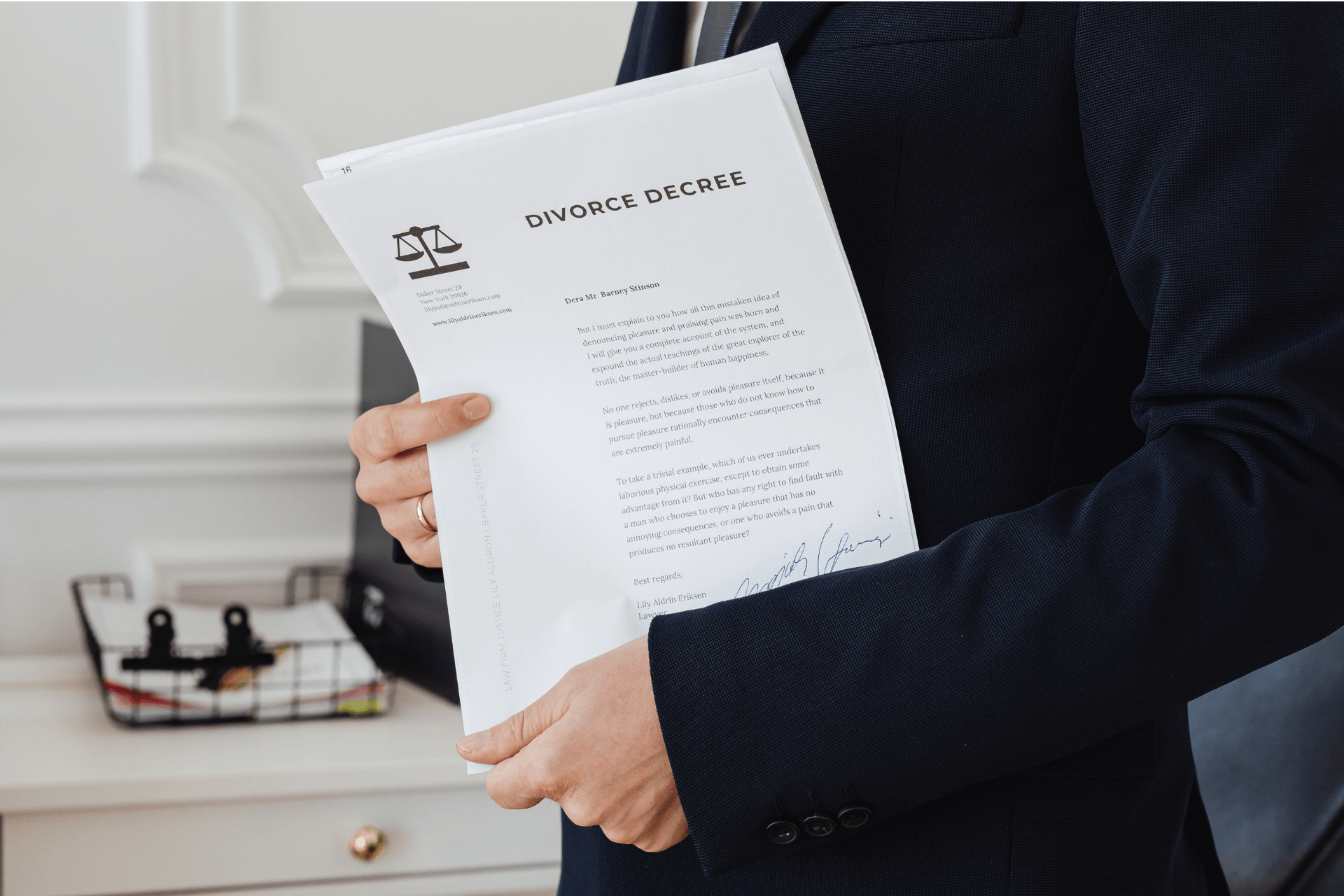
Post-divorce compensation rights are legal rights that the spouse who has suffered material or moral damage due to the termination of the marriage can demand from the other spouse who is at fault. Divorce doesn't just mean the end of the marriage; In some cases, it may also result in compensation in terms of the economic and personal rights of the parties.
Due to the intensity of divorce cases in Istanbul, compensation claims frequently come to the fore in family courts. In this process, fault status, evidence, economic loss, violation of personal rights and statute of limitations should be carefully evaluated.
What is Compensation After Divorce?
Compensation after divorce is the material or moral compensation that the spouse who suffered damage due to the events that led to the divorce can demand from the other spouse. This request can be brought forward in the divorce case, or under some circumstances, it can also be brought forward in a separate lawsuit after the divorce decision.
A request for compensation is not automatically accepted in every divorce case. The court evaluates the fault of the parties, the existence of damage and the nature of the events that caused the divorce.
What are the Types of Compensation in Divorce?
There are basically two types of compensation in divorce law: material compensation and non-pecuniary compensation. The terms and purposes of these two types of compensation are different.
| Compensation Type | Explanation |
|---|---|
| financial compensation | It is requested by the spouse whose current or expected interests have been damaged due to the divorce. |
| moral compensation | It is requested by the spouse whose personal rights were attacked due to the events that led to the divorce. |
| request time | It can be requested during the divorce case or after the divorce, if the conditions are met. |
| defect assessment | The fault status of the requesting spouse is important. |
| statute of limitations | The request must be made within 1 year after the divorce decision becomes final. |
What is Financial Compensation?
Financial compensation is the compensation that can be requested by the spouse whose economic interests have been damaged due to divorce. Damage to the financial support, living arrangement, economic security and future benefits expected from marriage due to divorce can be evaluated in this context.
According to Turkish Civil Code Article 174/1, the faultless or less faulty party whose current or expected interests are damaged due to divorce may request appropriate financial compensation from the faulty party. For this reason, the fault rate is one of the basic elements in the claim for financial compensation.
What is Non-Pecuniary Compensation?
Non-pecuniary damage is the compensation that can be requested by the spouse whose personal rights have been violated due to the events that led to the divorce. Insults, violence, disloyalty, humiliation, severe psychological pressure or degrading behavior may be subject to a claim for non-pecuniary damages.
According to TMK Article 174/2, the party whose personal rights have been violated due to the events that led to the divorce may request an appropriate amount of non-pecuniary compensation from the other party who is at fault. The purpose of non-pecuniary compensation is to compensate for the non-pecuniary damage suffered to some extent.
Difference Between Material and Non-Pecuniary Compensation
Monetary compensation relates to economic losses. Non-pecuniary compensation deals with damages to a person's honor, dignity, spiritual integrity and personality values.
Both material and non-pecuniary damages may be requested in the same divorce case. However, the court evaluates both requests separately and may reject the request if the conditions are not met.
Who Can Claim Compensation After Divorce?
In order to claim compensation after divorce, the person must be at fault or less at fault than the other spouse. It is generally not possible to accept the compensation claim of the spouse who is more seriously at fault.
Non-pecuniary damages must also include an attack on personal rights. Being divorced or upset about the end of the marriage alone is not sufficient for non-pecuniary compensation.
How Does Fault Affect Compensation?
In divorce cases, fault is at the center of compensation claims. Incidents such as deception, physical violence, psychological violence, abandonment, behavior that violates trust, insult or economic pressure may be taken into account in the assessment of fault.
The court determines the fault rate of the parties according to the evidence. If the requesting spouse is more seriously at fault, the claim for compensation may be rejected.
Can Compensation Be Received in Case of Equal Fault?
In case of equal fault, careful evaluation should be made regarding the claim for compensation. Since the requesting party must be faultless or less at fault for pecuniary compensation, equal fault may make it difficult to accept the claim.
In terms of moral compensation, an attack on personal rights and the fault of the other party are sought. Therefore, in cases of equal fault, compensation claims are examined according to the concrete characteristics of the file.
Can a Seriously Faulty Spouse Request Compensation?
As a rule, it is not possible for a seriously flawed spouse to claim compensation due to divorce. Because compensation is intended to protect the party that is less at fault or faultless in the events that led to the divorce.
For example, when the spouse who fundamentally caused the dissolution of the marital union requests material or moral compensation from the other party, the court first evaluates the fault situation.
Can a compensation lawsuit be filed after divorce?
Yes. If the compensation claim is not put forward in the divorce case, it is possible to file a separate lawsuit after the divorce decision is finalized. However, this right is not indefinite.
According to TMK Article 178, lawsuit rights arising from divorce become statute-barred after 1 year from the date of finalization of the divorce judgment. For this reason, the time period for claiming compensation after divorce should be followed carefully.
Statute of Limitations for Compensation After Divorce
The person who wants to claim material or moral compensation after the divorce must file a lawsuit within 1 year from the finalization of the divorce decision. If this period is missed, the other party may file a statute of limitations objection.
The limitation period begins not from the date the divorce decision was made, but from the date the decision became final. For this reason, the finalization annotation and the decision date should be checked together.
Compensation Rights in Consensual Divorce
In consensual divorce, the parties can make arrangements in the protocol regarding material and moral compensation. Either party may receive compensation, waive compensation, or agree on a specific payment plan.
However, the expressions used in the protocol are extremely important. Provisions such as "The parties have no claim for compensation from each other" may prevent making new claims after the divorce.
Compensation in Contested Divorce
In contested divorce cases, compensation claims are often evaluated together with the parties' fault claims. The court makes its decision by examining witness statements, message records, social media content, hospital reports and other evidence.
The amount of compensation in these cases may vary depending on the severity of the events and the economic situation of the parties. The requested amount must be supported by legal and concrete justifications.
Compensation Due to Deception
Cheating is one of the important cases of fault that may lead to a claim for both material and non-pecuniary damages in divorce cases. Violation of the duty of loyalty can be considered as an attack on personal rights.
However, the allegation of deception must be proven with evidence. Messages, photographs, hotel records, witness statements or social media contents may serve as evidence depending on the concrete incident.
Compensation Due to Violence
Physical violence, psychological violence, economic violence or threatening behavior are important in terms of divorce compensation. The violent spouse may request material and moral compensation if the fault and damage conditions are met.
In cases of alleged violence, assault reports, law enforcement reports, protection orders, witness statements and message records can be used as evidence. Security measures should also be evaluated in such files.
Compensation for Insult and Degrading Behavior
If one of the spouses constantly insults the other, makes derogatory remarks, or humiliates the other in public, it may be subject to a claim for non-pecuniary damages. These behaviors may constitute an attack on personal rights.
The court evaluates the gravity of the words, their continuity, the environment in which they were uttered, and their impact on the marriage. Isolated and light arguments and systematic insults are not treated in the same way.
Compensation Due to Economic Violence
Economic violence may occur in the form of confiscating the spouse's income, preventing him from working, not meeting his basic needs, or putting pressure on him through economic dependence. Such behavior can be considered as a fault in the divorce case.
A claim for material or moral compensation may arise due to economic violence. Bank records, messaging, witness statements and spending patterns can be used to prove these claims.
How is Divorce Compensation Calculated?
There is no fixed calculation formula for divorce compensation. The court evaluates the fault of the parties, their economic and social conditions, the duration of the marriage, the severity of the events and equity.
While the loss of economic benefit comes to the fore in material compensation, the severity of the violation of personal rights is taken into account in non-pecuniary compensation. It is important that the amount requested is compatible with the incident.
Factors Affecting the Amount of Compensation
The amount of compensation is determined differently in each case. The court looks not only at the income of the parties but also at the nature of the events that caused the divorce.
| Criterion | Effect on Compensation |
|---|---|
| defect rate | It affects whether compensation will be accepted or not. |
| marriage duration | Economic expectations may be evaluated differently in long marriages. |
| Income of the parties | It is taken into account when determining the amount of compensation. |
| gravity of events | Violence, deceit or serious insult may affect the amount. |
| Personal right violation | It is important in terms of moral compensation. |
| economic loss | It is evaluated in terms of financial compensation. |
| social status | It can be taken into account within the criteria of fairness. |
Evidence in the Post-Divorce Compensation Case
Evidence is of great importance in compensation claims. The claim of fault and damage must be supported by concrete evidence.
| Type of Evidence | Area of Use |
|---|---|
| Witness statements | It can be used to prove marital events. |
| Messages and correspondence | It may indicate allegations of insults, threats, deception or coercion. |
| Social media records | It can be important in cases of allegations of infidelity or humiliation. |
| Assault report | It is strong evidence in allegations of violence. |
| protection order | It can support the process of violence or threats. |
| Bank records | It can be used to detect economic violence or financial situation. |
| court files | May indicate previous criminal or family law proceedings. |
Should the Claim for Compensation be Included in the Divorce Petition?
If compensation is requested while the divorce case is ongoing, this request must be clearly stated in the petitions. The type and amount of compensation requested should be clearly stated.
If compensation is not requested in the divorce case, it is possible to file a separate lawsuit within 1 year after the decision becomes final. However, it is important not to miss the deadline.
What Happens If Compensation Is Not Paid?
If the compensation ordered by the court is not paid, enforcement proceedings may be initiated after the decision becomes final. The provisions of the decision or protocol regarding the payment of compensation in cash or in installments are taken into account.
If the compensation payment plan in a consensual divorce is included in the protocol, this plan must be clear. Unclear payment provisions may create problems in the enforcement process in the future.
Are Alimony and Compensation the Same Thing?
Alimony and compensation are different legal institutions. Alimony is intended as post-divorce living support or contribution to children's expenses.
Compensation aims to compensate for the material or moral damage caused by the events that led to the divorce. Both alimony and compensation can be requested in the same file.
Is Property Sharing the Same as Compensation?
Property division relates to the liquidation of property acquired during the marriage. Divorce compensation is a separate demand arising from fault and events that led to the divorce.
For this reason, property regime receivables should not be confused with material/moral compensation. These requests are different in terms of statute of limitations, lawsuit conditions and the subject of proof.
Compensation Cases After Divorce in Istanbul
In Istanbul, post-divorce compensation cases are heard in family courts. Istanbul Courthouse, Anatolian Courthouse, Bakırköy Courthouse or another authorized courthouse may be in charge depending on the location of the parties and the characteristics of the file.
Due to the workload of family courts in Istanbul, it is important to prepare the file completely. Providing evidence on time and expressing requests clearly ensures that the process progresses more smoothly.
Legal Support from Attorney Mehmet Emin Kurşun
Post-divorce compensation rights are a technical process due to fault status, statute of limitations and evidence evaluation. Submitting the request at the wrong time, with incomplete evidence or with the wrong amount may lead to loss of rights.
Attorney Mehmet Emin Kurşun provides legal support in post-divorce financial compensation, moral compensation, consensual divorce protocol, contested divorce and family law cases in Istanbul.
What Should Be Considered to Avoid Loss of Rights?
People who want to claim compensation after divorce should carefully follow the finalization date of the decision and the 1-year statute of limitations. Additionally, claims of defects and damages must be supported by evidence.
Claiming compensation is one of the most important financial consequences of the divorce process. Legally evaluating the file before filing a lawsuit on this issue in Istanbul helps to protect rights more accurately and effectively.
Frequently Asked Questions
What is compensation after divorce?
Compensation after divorce is the compensation that a spouse who has suffered material or moral damage due to the events that led to the divorce can demand from the other spouse.
What compensation is required in divorce?
In divorce cases, material compensation and non-pecuniary damages may be requested. Since their conditions are different, each is evaluated separately.
Who can claim financial compensation?
The flawless or less flawed spouse whose current or expected interests are damaged due to divorce may request financial compensation.
In what cases is moral compensation requested?
The spouse whose personal rights were violated due to the events that led to the divorce may claim non-pecuniary compensation. Examples of this may include violence, insults, deception or humiliation.
Can a compensation lawsuit be filed after the divorce?
Yes. A separate compensation lawsuit can be filed within 1 year after the divorce decision becomes final.
How many years is the statute of limitations for compensation after divorce?
Claims for compensation arising from divorce must be submitted within 1 year from the finalization of the divorce judgment.
Can compensation be obtained in a consensual divorce?
Yes. Parties can agree on material or moral compensation in the consensual divorce protocol. Waiver of compensation can also be arranged in the protocol.
Can compensation be obtained due to deception?
If it constitutes deception, negligence or violation of personal rights, it may be subject to a claim for material and moral damages. However, the claim must be proven with evidence.
Are alimony and compensation the same thing?
No. Alimony is a living support. Compensation is intended to compensate for material or moral damage arising from the events that led to the divorce.
Where can a compensation case be filed after divorce in Istanbul?
The case is filed in the competent family court. The competent courthouse in Istanbul is determined according to the location of the parties and the characteristics of the file.