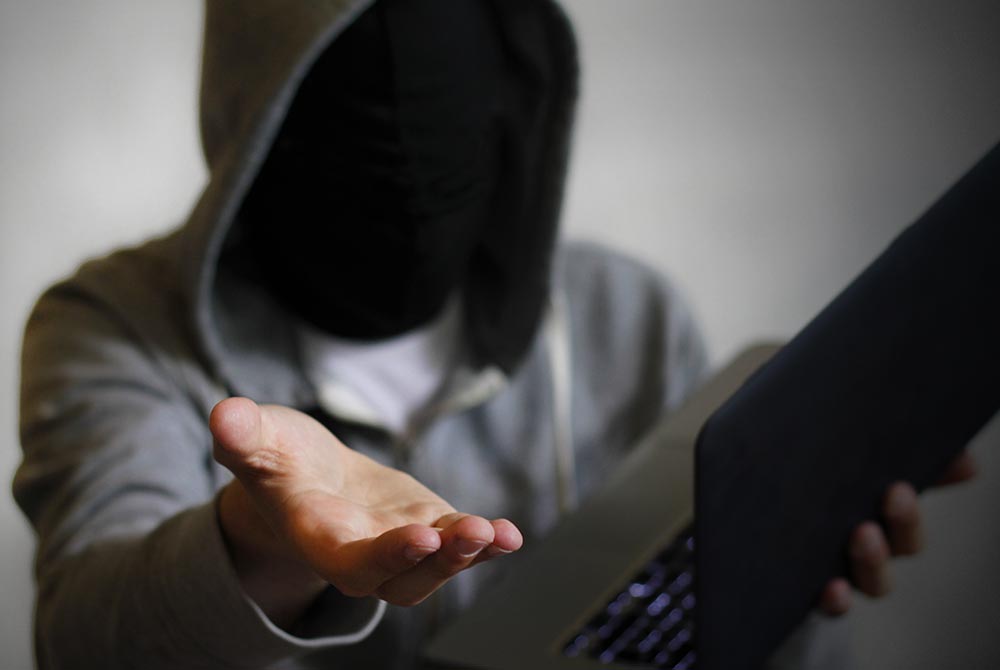
A person who encounters images and messages containing blackmail should first refrain from doing what is demanded under threat or pressure, preserve the messages and images as evidence without deleting them, and apply to the judicial authorities as soon as possible. In particular, threats to send private or sexually explicit images to others, share them online, or disclose them to family members may have serious legal consequences.
Under Article 107 of the Turkish Penal Code, which regulates the offense of blackmail, forcing a person to do or refrain from doing something that they are not legally obliged to do, or forcing them to obtain an unjust benefit, is punishable. Seeking to obtain a benefit by threatening to disclose or allege matters that could harm a person's honor or reputation may also fall within the scope of blackmail. For detailed information about the legal aspects of the offense of blackmail, the blackmail offense attorney page may be consulted.
What Should Be Done First When Receiving a Blackmail Message?
It is important for a person receiving a blackmail message to remain calm and secure the evidence without escalating the argument with the other party. Existing evidence should be preserved before taking actions such as deleting messages, blocking the account, or changing the phone.
- Take screenshots of the blackmail messages.
- Make sure that the dates and times of the messages are visible.
- Preserve conversations on WhatsApp, Instagram, Telegram, SMS, email, or other platforms as much as possible.
- Do not delete images, videos, audio recordings, or files that have been sent.
- Record information such as the profile name, username, phone number, and account link.
- If money was sent, keep bank receipts and payment records.
It is important that the evidence does not consist solely of screenshots. Where necessary, technical examinations of the phone, computer, or relevant digital accounts may also be considered within the scope of the investigation.
If You Are Threatened That Blackmail Images Will Be Shared
Threats to send private images to family members, friends, a workplace, or social media users should be handled with particular care. The fact that an image was previously taken by the person with their own consent or sent to the other party does not automatically mean that the image may subsequently be shared without consent.
In the practice of the Court of Cassation, the recording or disclosure of images concerning a person's private life without consent is evaluated separately according to the circumstances of the specific case; the offenses of blackmail and violation of the confidentiality of private life may also arise together in the same incident.
Should Money Be Sent If Money Is Demanded for Blackmail?
Paying the money demanded by a person committing blackmail does not legally resolve the problem. On the contrary, it is possible to face new demands for money after making a payment. Therefore, instead of making a payment merely in the hope that the blackmail will end, the evidence should be preserved and legal remedies should be pursued.
The situation does not change even if money has already been sent. Bank receipts, transfer or EFT information, cryptocurrency transfer records, or other payment documents should be preserved. Having made a payment does not prevent a complaint from being filed concerning the act of blackmail.
How Should Blackmail Messages Be Preserved as Evidence?
Blackmail messages should be preserved without altering or deleting them as much as possible. In addition to screenshots, preserving the entire conversation in the application where the messages are located may be important because it can show what happened before and after the incident.
In particular, the other party's username, phone number, profile information, message dates, and files sent by the person should be preserved together. Rather than keeping only a few selected screenshots, preserving the messages in a way that shows the entire course of the incident may be useful in evaluating the evidence.
Should Blackmail Messages Be Deleted?
Since blackmail messages may potentially be used as evidence, they should not be deleted before filing a complaint or making a legal application. If changing the account or phone becomes necessary, it is important to securely back up the existing data.
It is also not appropriate to expose the other party by sharing the messages on social media. Evidence should be submitted to the relevant judicial authorities whenever possible and should not be unnecessarily shared with third parties.
What Is the Penalty for Blackmail?
Under Article 107/1 of the Turkish Penal Code, the basic form of the offense of blackmail is punishable by imprisonment from one to three years and a judicial fine of up to five thousand days. Article 107/2 separately regulates situations in which a person acts with the intention of obtaining a benefit for themselves or another person by threatening to disclose or allege matters that could harm the person's honor or reputation.
Is Threatening to Share Images Always Blackmail?
It cannot be said that every threat to share an image automatically constitutes the offense of blackmail. In blackmail cases, the purpose of the act, what the offender demands from the victim, the content of the threat, and the entirety of the communication between the parties are evaluated together.
For example, demanding money, property, or another unjust benefit by stating that a person's private images will be published may be evaluated under Article 107 of the Turkish Penal Code. On the other hand, where there is only a threat of causing harm, the offense of threatening may arise depending on the circumstances of the case. In decisions of the Court of Cassation, the purpose of the offender and the nature of the demand are also important in distinguishing between blackmail and threats. Where the offense of threatening must also be evaluated, legal support concerning the offense of threatening may be obtained.
What Should Be Done If Private Images Are Shared Online?
If the person committing blackmail has shared the images on a social media account, website, or another digital environment, the first step should be to take a screenshot of the page where the content appears and, if possible, record the relevant link. It is also important to establish the date and time of the publication.
Disclosure of images without consent may, depending on the circumstances of the specific case, constitute the offense of violating the confidentiality of private life under Article 134 of the Turkish Penal Code. The Court of Cassation has issued decisions evaluating the publication of private images online without consent as a violation of the confidentiality of private life.
Where Should Blackmail Messages Be Reported?
A report or complaint concerning an act of blackmail may be made to the Chief Public Prosecutor's Office or law enforcement authorities. A complaint may be submitted in writing or made verbally to be recorded in an official report.
Blackmail messages, images, screenshots, payment documents, user information, and other evidence related to the incident should be submitted during the application. The complaint petition should clearly explain when the incident began, what the offender demanded, what threats were made, and, if applicable, whether the images were shared. In such applications, Attorney Mehmet Kurşun may evaluate the legal nature of the incident and the available evidence together.
What Should Be Done If the Account Owner Is Unknown in Blackmail Messages?
The fact that blackmail messages were sent from a fake social media account, an anonymous number, or a different internet account does not prevent a complaint from being filed. The identity of the actual owner of the account may be investigated through digital examinations conducted as part of the investigation.
Therefore, it is not appropriate for the victim to delete the messages or abandon the complaint simply because they cannot identify the offender themselves. The username, profile address, phone number, email address, and message records should be preserved as much as possible.
Can Compensation Be Claimed Due to Blackmail?
If a person suffers material or non-pecuniary harm as a result of an act of blackmail, legal liability may also arise independently of the criminal investigation. In particular, in cases such as the dissemination of private images, damage to a person's reputation, or financial loss, a compensation claim may be considered depending on the circumstances of the specific case.
The scope of a compensation claim is determined according to the nature of the harm suffered, the unlawful act, and the causal connection. Therefore, it is not possible to state that the same amount or the same type of compensation will arise in every blackmail case.
Points to Consider Regarding Images and Messages Containing Blackmail
- Do not send new images or personal information to the person committing blackmail.
- Obtain legal support before sending the demanded money.
- Do not delete the messages or images.
- Do not publicly expose the person committing blackmail on social media.
- Record the account information and usernames.
- If a payment was made, preserve the receipt and transfer records.
- If images have been shared, preserve evidence of the page where the content was published.
- Apply to the Chief Public Prosecutor's Office or law enforcement authorities to make a complaint or report.
Legal Support from an Attorney in Blackmail Cases
In cases involving images and messages containing blackmail, evaluating the incident solely in terms of the offense of blackmail may not always be sufficient. The violation of the confidentiality of private life, threatening, or other offenses may also arise depending on the nature of the specific incident.
Therefore, the content of the messages, the nature of the images, the offender's demands, and whether the images were actually shared should be evaluated together. Obtaining legal support from an attorney practicing in criminal law may be useful, particularly for preserving digital evidence and submitting it properly to the investigation file. Attorney Mehmet Kurşun may provide support in evaluating criminal investigations and related legal proceedings concerning blackmail allegations according to the circumstances of the specific case.
Frequently Asked Questions
Will a person who commits blackmail go to prison?
If the offense of blackmail and the offender's liability are established by the court, the imprisonment and judicial fine sanctions provided under Article 107 of the Turkish Penal Code may apply.
Is blackmail involving private images a crime?
Yes. Demanding an unjust benefit by threatening to disclose or share private images may constitute the offense of blackmail depending on the circumstances of the case. Sharing the images without consent may also be evaluated separately as a violation of the confidentiality of private life.
What happens if I delete blackmail messages?
Deleting the messages may result in the loss of important evidence. Therefore, messages and other digital data should be preserved before filing a complaint.
Can I report the person committing blackmail to the police?
Yes. A report or complaint concerning blackmail may be made to the Chief Public Prosecutor's Office or law enforcement authorities. It is important to submit the evidence when making the application. Attorney Mehmet Kurşun may also evaluate the legal process according to the circumstances of the specific case.